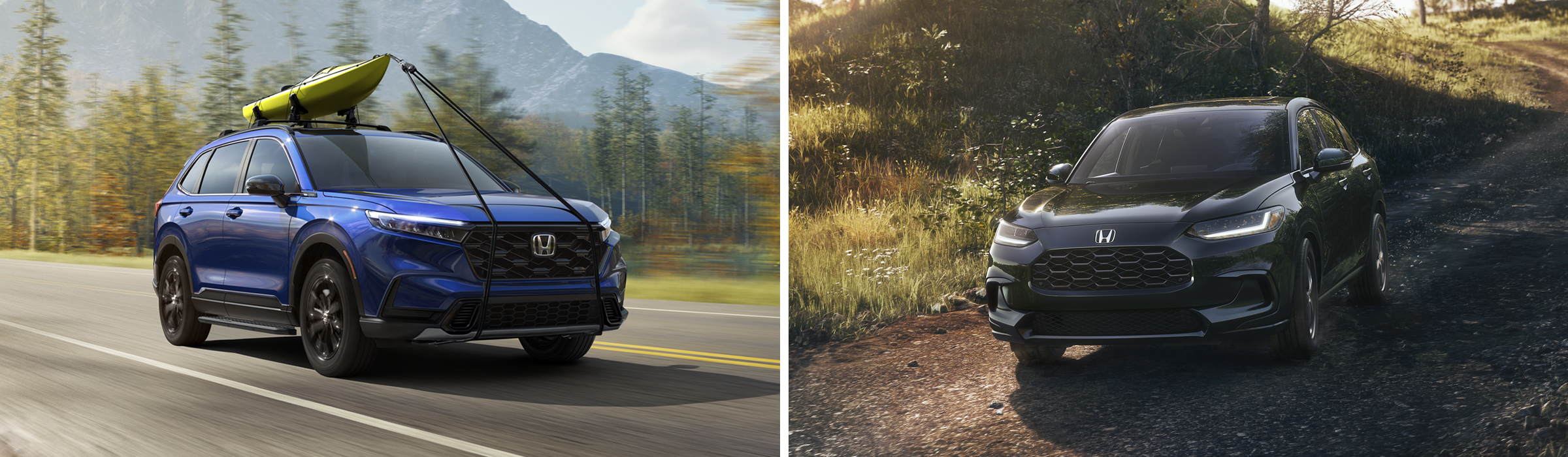
Trying to decide between the Honda HR-V vs. Honda CR-V? These SUVs share a lot of similarities, but they’re suited for slightly different lifestyles. One is compact and efficient, while the other is spacious and powerful. The HR-V is ideal for drivers who want maneuverability and value, while the CR-V offers more capability, more room, and the option of hybrid power. Both deliver Honda’s signature reliability, but the right choice depends on how much space and performance you need. Learn more about the Honda CR-V specs vs the Honda HR-V specs, then visit Greensboro Honda for a test drive today.
| Category | Honda HR-V | Honda CR-V |
|---|---|---|
| Price | Starting at $26,500* | Starting at $30,920* |
| Engines | 2.0L 4-cyl, 158 horsepower | 1.5L turbo 4-cyl, 190 horsepower or 2.0L hybrid powertrain, 204 horsepower combined |
| Best Available MPG | Up to 26 city / 32 highway^ | Gas: 28 city / 33 highway; Hybrid: 43 city / 36 highway** |
| Hybrid Available? | No | Yes |
| Cargo Space | 24.4 cu. ft. behind rear seats; 55.1 cu. ft. max | 39.3 cu. ft. behind rear seats; 76.5 cu. ft. max |
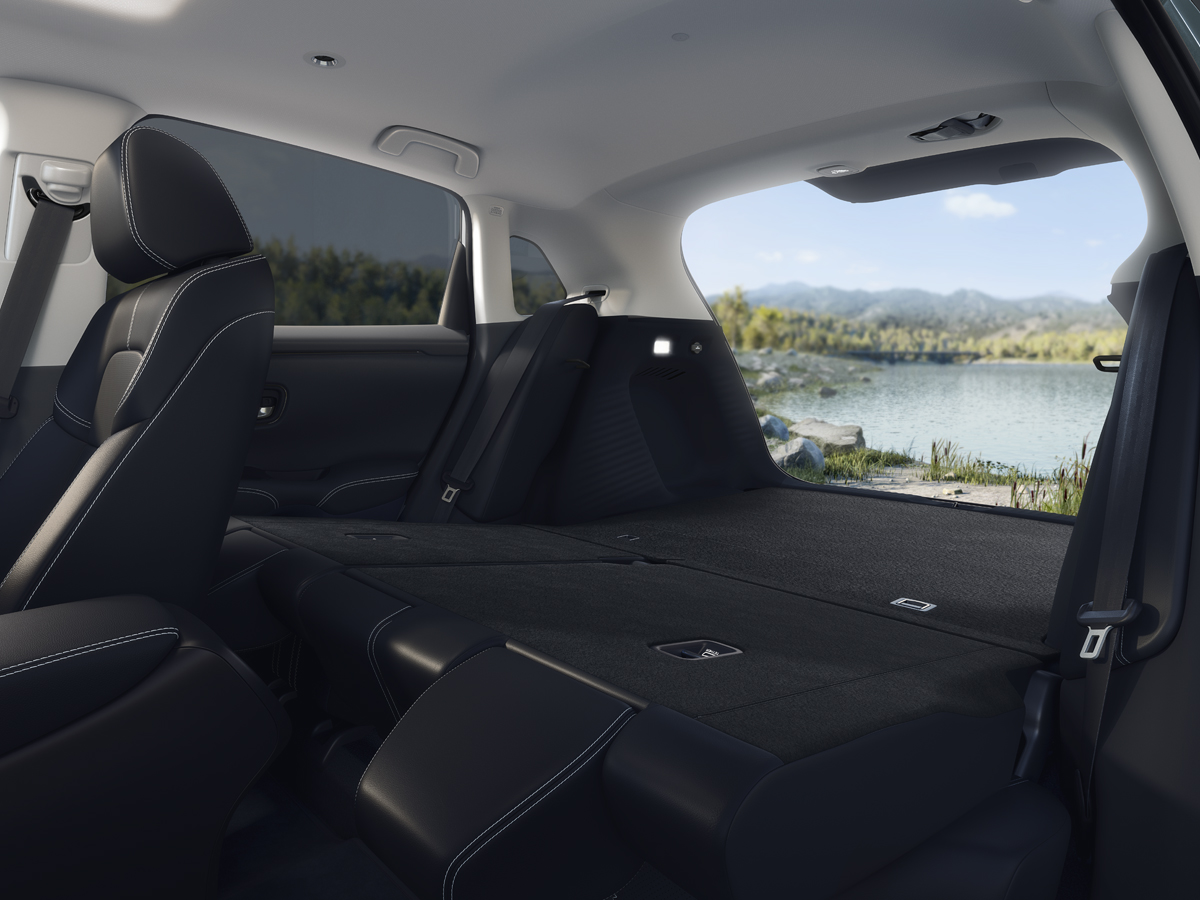
The Honda HR-V interior is designed to feel simple and open. Its 9-inch touchscreen sits high on the dash, making it easy to view without taking your eyes far from the road. Both the HR-V and CR-V use Honda’s clean horizontal dash design, but the HR-V keeps the look more minimal. Front passengers have 41.9 inches of legroom, and the rear seats offer 37.7 inches, giving the HR-V enough space for adults while still feeling compact. Cargo capacity reaches 55.1 cubic feet with the rear seats folded, which works well for everyday errands or weekend trips.
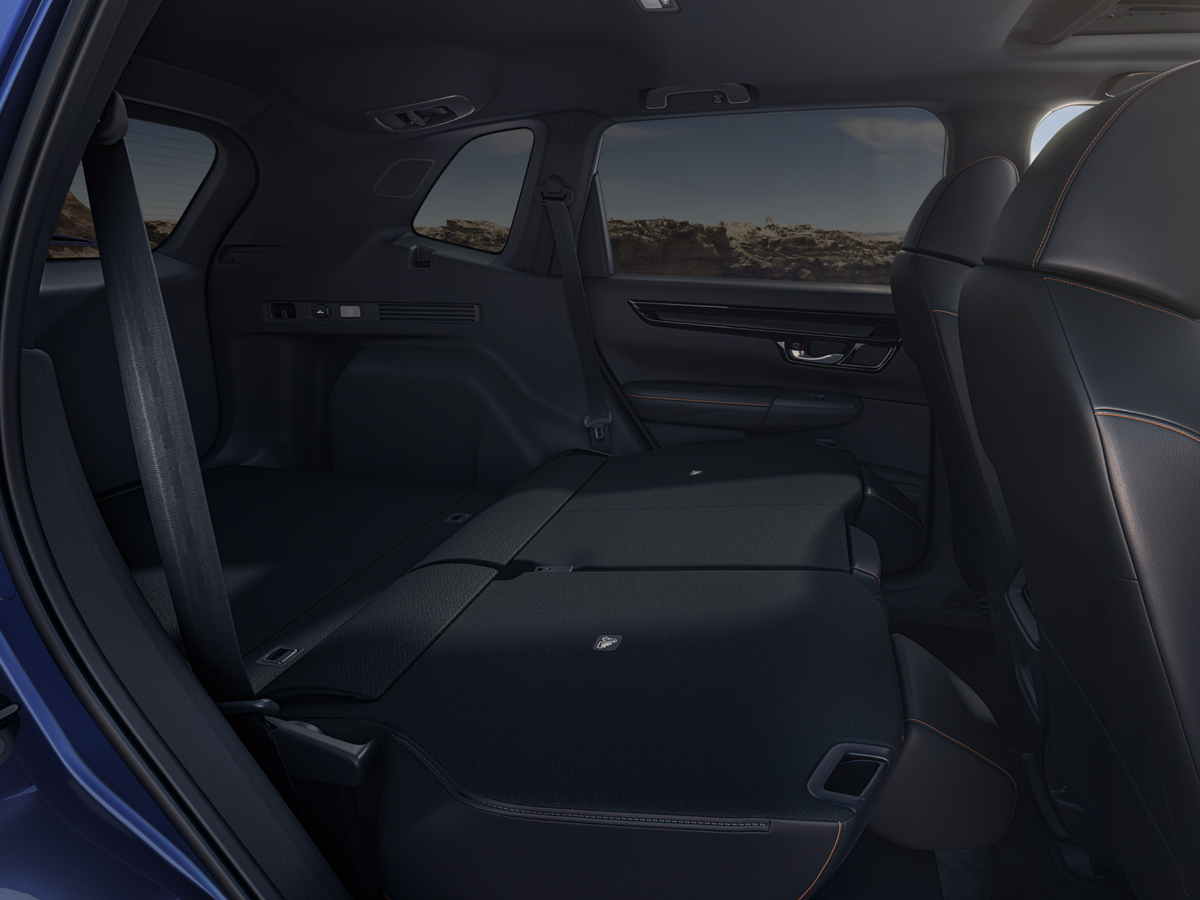
The Honda CR-V interior expands on the same design approach but offers more room and a more premium feel. Its 9-inch touchscreen uses a similar placement to the HR-V, yet the CR-V can be equipped with a larger digital gauge display for a more upscale experience. Rear passengers benefit from 41 inches of legroom, which creates a noticeably roomier second row. Cargo space grows to 76.5 cubic feet when the seats are folded, giving the CR-V a clear advantage for drivers who need extra flexibility. Both cabins share Honda’s focus on comfort and intuitive controls, but the CR-V delivers a more spacious and refined environment overall.
The HR-V is built for light-duty driving and urban versatility. It’s easy to park and designed for efficiency rather than heavy capability with available all-wheel drive. The CR-V, on the other hand, offers stronger acceleration and higher towing capability (up to 1,500 pounds when properly equipped). It can also be equipped with available all-wheel drive. Its hybrid model also delivers responsive torque while maintaining an excellent fuel economy.
*TSRP excluding tax, license, registration, $1,450 destination charge, and accessories. Dealer prices may vary. TSRP does not include $455 charge for premium colors.
^26 city/32 highway/28 combined mpg rating for 2WD trims. 25 city/30 highway/27 combined mpg rating for AWD trims. Based on 2026 EPA mileage ratings. Use for comparison purposes only. Your mileage will vary depending on how you drive and maintain your vehicle, driving conditions and other factors.
**28 city/33 highway/30 combined mpg rating for 2WD trims. 27 city/31 highway/29 combined mpg rating for AWD trims. 43 city/36 highway/40 combined mpg rating for 2WD hybrid trim. 40 city/34 highway/37 combined mpg rating for AWD hybrid trim. 38 city/33 highway/35 combined mpg rating for TrailSport Hybrid AWD trim. Based on 2026 EPA mileage ratings. Use for comparison purposes only. Your mileage will vary depending on how you drive and maintain your vehicle, driving conditions, battery-pack age/condition (hybrid trims) and other factors.